
Blog
The Story of Tree-Free Paper and a New Future for Sustainability


A Seed of an Idea
It began with a simple but troubling realization: paper, something so ordinary and essential to our lives, is often born from destruction. Every notebook, calendar, or gift wrap made from wood pulp paper carries with it the loss of a tree, the draining of water, and the release of chemicals into rivers and skies.
For Kavya Madappa, an entrepreneur from Coorg with deep roots in nature, this fact was unsettling. She loved the feel of paper — sketching on it, writing on it, folding it — but she could not shake off the irony that something so delicate was costing the earth its forests. Coorg, with its coffee estates and lush greenery, had taught her to value the environment as more than scenery: it was a living system that demanded respect.
The question kept echoing in her mind: Could paper exist without cutting a single tree?
The Birth of Bluecat Paper
In 2018, Kavya answered that question by founding Bluecat Paper, a company dedicated to producing paper without a shred of wood pulp. Her factory in Bengaluru’s Peenya industrial area became a workshop of experimentation and innovation, where agricultural waste, textile scraps, and even elephant dung were reborn as sheets of writing paper, packaging, and art materials.
The name “Bluecat” itself was quirky, almost whimsical, but it carried an edge. It stood out, like the company’s mission: daring, different, and determined to challenge an age-old industry.
Why Trees Shouldn’t Pay the Price
Traditional papermaking is a resource-hungry process. It takes around 10 liters of water to make a single A4 sheet of paper, and millions of trees are felled each year to keep up with global demand. The bleaching, pulping, and chemical treatments release toxins that poison rivers and harm communities downstream.
Bluecat Paper flipped the script. Instead of looking at forests as raw material, it turned to what the world usually throws away: rags from garment factories, stalks left after harvesting crops, husks discarded from coffee estates, and weeds clogging lakes. In a way, Bluecat’s raw materials were already waiting at the margins of society, dismissed as useless.
By repurposing these, the company not only made paper but also solved waste problems for other industries. Coffee husk that once rotted away, banana stems left in fields, or cotton fabric off-cuts destined for landfills all found second lives as tree-free paper.
The Craft of Making Tree-Free Paper
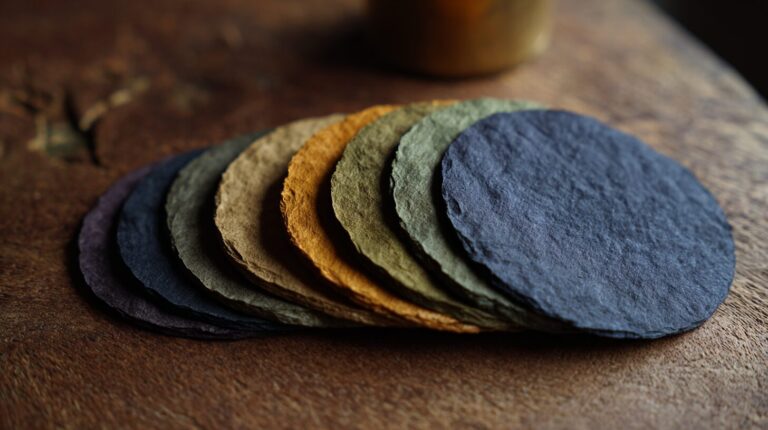
At Bluecat’s factory, the process is part science, part artistry. The waste materials are cleaned, pulped, and beaten until they soften into fibers. These fibers are then spread into sheets using a combination of traditional techniques and modern equipment. Unlike industrial mills that churn out standardized rolls, Bluecat’s production embraces texture, character, and uniqueness.
The result is paper that feels alive. Cotton rag paper carries a soft elegance; banana paper has a subtle grain; coffee husk paper smells faintly earthy; seed paper sprouts into wildflowers when buried in soil. Each variety tells its own story.
The machine deckle width of 1000 mm allows for rolls and sheets of different sizes, while hand-finishing ensures quality and individuality. No two sheets are identical, and that imperfection is part of their charm.
Saving Water, Energy, and Forests
Bluecat Paper is more than just craft. It is conservation in action. By choosing not to cut trees, the company directly contributes to preserving biodiversity. Its water recycling systems recycle and reuse water, saving tens of thousands of liters each day that would otherwise be wasted in conventional mills.
The company’s eco-math is compelling:
0 trees cut down for its paper.
Up to 55,000 liters of water saved per day.
Agricultural and textile waste diverted from landfills.
Lower carbon footprint thanks to natural processes and less reliance on energy-intensive pulping.
These aren’t abstract numbers. They translate into real forests standing tall, rivers less polluted, and farmers finding value in crop residues.
Empowering People Along the Way
Sustainability, for Bluecat, isn’t only about materials and machines. It’s also about people. Many of the workers at the factory are women from surrounding communities, trained to handle the delicate processes of sheet-making, drying, and finishing.
By offering equal pay, safe working conditions, and skills training, Bluecat Paper extends its impact beyond environmental conservation. It empowers individuals, often those with limited opportunities, to become artisans of change. Each sheet of paper carries not only fibers of cotton or flax but also the pride and livelihood of those who made it.
A Kaleidoscope of Products
What began as sheets of handmade paper has now blossomed into a diverse catalog:
Journals and notebooks with covers made from denim scraps or husk paper.
Gift boxes and packaging crafted from lemongrass paper or coconut paper.
Wedding invitations and stationery that combine elegance with eco-friendliness.
Seed paper tags that sprout into basil, tomato, or wildflowers.
Artisanal sheets favored by artists for their texture and durability.
The beauty of Bluecat’s products lies not only in their design but also in the story they tell. When someone buys a journal made of coffee husk paper, they hold in their hands the journey of a bean, from plantation to cup to page.
Going Global
Though born in Bengaluru, Bluecat Paper’s wings spread quickly. Its tree-free paper is now exported to about 40 countries, reaching eco-conscious consumers, designers, and businesses worldwide. From sustainable packaging for boutique brands in Europe to art supplies in North America, Bluecat’s papers travel far, carrying with them a piece of India’s agricultural and artisanal heritage.
This global reach demonstrates that sustainability has universal appeal. The same paper that resonates with a conscious buyer in Berlin speaks equally to an artist in New York or a wedding planner in Mumbai.
Recognition and Support
Bluecat Paper’s work has not gone unnoticed. Media outlets like The Hindu, YourStory, and The Better India have highlighted its mission and methods. The company has also attracted the attention of sustainability-focused investors and grant programs, including initiatives that support circular economy innovations.
Beyond recognition, these stories spark conversations. They inspire other entrepreneurs to rethink waste, challenge old industries, and explore materials once thought unusable.
Challenges in a Paper-Hungry World
The journey, however, is not without hurdles. Competing with mass-produced, wood-pulp paper on price and scale is a constant battle. Bluecat’s handmade and semi-mechanized processes cannot match the economies of scale of industrial giants.
Consumer awareness, though growing, still lags. Many people continue to equate sustainability with higher cost, not realizing that the true cost of cheap paper is hidden in felled forests and polluted rivers.
Yet Bluecat Paper embraces these challenges with creativity. Instead of trying to outproduce industrial mills, it positions itself as a premium eco-conscious brand, a product for those who value sustainability, craftsmanship, and storytelling.
The Philosophy of Circularity
At its heart, Bluecat Paper is a circular economy brand. Waste from one industry becomes input for another. A torn shirt becomes writing paper; a banana stem becomes stationery; a weed like water hyacinth becomes packaging.
This philosophy extends to its production methods, where water is reused, energy consumption is minimized, and by-products are composted or recycled. In a world chasing growth at any cost, Bluecat reminds us that progress can also mean looping back, reusing, and regenerating.
Looking Ahead
The vision for Bluecat Paper is bold: to make tree-free paper mainstream. That means scaling up production without losing the artisanal quality, expanding product lines to serve industries like fashion and food packaging, and deepening collaborations with eco-conscious brands worldwide.
Patents and research into low-energy papermaking machines are underway, signaling that Bluecat doesn’t want to remain only a boutique brand but also a pioneer of innovation. If successful, its technologies could reshape how paper is produced at larger scales, nudging the entire industry toward sustainability.
Why Bluecat’s Story Matters
Bluecat Paper is more than a business case study. It is a reminder that innovation doesn’t always mean inventing something new. Sometimes it means rediscovering what we already have and reimagining its potential. India has a long tradition of handmade paper, going back centuries. Bluecat revives that heritage, adapts it to modern sustainability needs, and connects it to global markets.
In an age where climate change feels overwhelming, stories like Bluecat’s offer hope. They show that alternatives exist, that change is possible, and that even small actions like choosing a sustainable notebook ripple out into forests saved and waters protected.
Conclusion
Bluecat Paper started with one woman’s conviction that paper need not cost the earth. Today, it stands as a beacon of sustainable innovation, proving that tree-free, water-wise, and waste-repurposing paper can be beautiful, functional, and globally relevant.
Its journey is still unfolding, but the message is already clear: the future of paper doesn’t have to be whitewashed with chemicals or stained with deforestation. It can be colorful, textured, alive, and kind to the planet.
When you pick up a Bluecat journal, you don’t just hold paper. You hold coffee husks, banana stems, flax fibers, denim scraps, and the dream of a world where progress doesn’t come at the cost of nature.

 Stationery